
One in 108,435
The DOW is over 50,000 right now.

Hello. It’s been a while. To paraphrase every newsletter I’ve read in the past few weeks, it’s difficult to write when the world is burning, and the firehose of distressing information not only does not stop, but also gains more force.
I’ve started and stopped writing this newsletter at least four times because, as I start to write, something else happens that muddies the trajectory of my thoughts. And, as you’ll learn below, some events have disrupted more than my writing.
January 2026 marked the highest number of layoffs in January since 2009 - employers cut 108,435 jobs.
I’m one of them. Last month, my employer informed me that my position was being eliminated and that I was being laid off.
It wasn’t a complete surprise, but that doesn’t make it any less devastating. I was going to begin this month’s newsletter with an almost apology of sorts. The initial topic of this newsletter was setting boundaries around your job. I was going to tell you how, for the first time in my adult life, I have a stable job that I genuinely enjoy, with coworkers whom I mostly enjoy.
Then I got laid off.
Being part of a DINK household (dual income, no kids) with a partner who is the primary wage earner meant that my losing my sole source of income wouldn’t be financially devastating for us. I assured friends and family that we were in a place where I didn’t need to find a job immediately. It wasn’t the same as if my husband got laid off.
Then my husband got laid off.
In the span of one week, we went from being DINKs to being OINKs to being NINKs.
Well, fuck.
Let this be my annual reminder to you to update your resume, even if you think you don’t need to. Because if it turns out you find yourself without a job, you are going to be so thankful to past you for giving present unemployed you the gift of one less thing to worry about.
The roles I’ve had in the beer industry have been pretty niche and do not always translate directly into the kinds of jobs I see posted. I want to transition from NINKs to DINKs as quickly as possible, and now is not the time to be meek.
If shameless self-promotion isn’t your thing, I get it - you can keep scrolling down to the other stuff in this newsletter, no hard feelings.
Here are some ideas for roles I am looking for.
Training and education - a friend asked me the other day what I would ultimately like to continue doing, and it’s providing training and education. I’m good at it, and I enjoy it. It’s one area where I can almost always get into a flow state. Obviously, I would like to stay in beer, but my main talent is education, and I can do that in any industry.
Writing and research - I’ve long joked that, if I could stay in school forever, I would. I absolutely love researching topics, learning new things, and translating those topics into something interesting to read. I also love writing and think I’m pretty good at it.
Sensory and quality - You may have heard that I’m pretty good at sensory, too. 🙂 I’ve helped establish sensory programs at two breweries, one with multiple facilities, and am a graduate of one of the top sensory programs in the world, UC-Davis.
Management and organizational change - I have a degree in management and twenty years of management experience. I like being in charge, and I’m good at it.
Here are some ideas for roles I am not looking for:
Sales - I am not a hustler by nature, and, having been laid off from two beer jobs in the space of four years, I am not really that interested in hustling for someone else’s business.
Taproom - I did my time in customer service during undergrad and law school, and do not want to work directly with the public on an extended basis.
Brewing and production - I am too old. Also, it’s no secret that those jobs aren’t usually well-paid, despite being the literal backbone of breweries.
I am open to contract work, such as one-off projects or trainings, consulting, or a full-time position. I absolutely love living in Atlanta, but am willing to relocate just about anywhere in the U.S.1
Please keep me in mind if you see an opportunity that seems like it may be a good fit for me. I can be reached via this newsletter, my website, or via email at jen(at)underthejenfluence(dot)beer.
Sexy or Stigma?
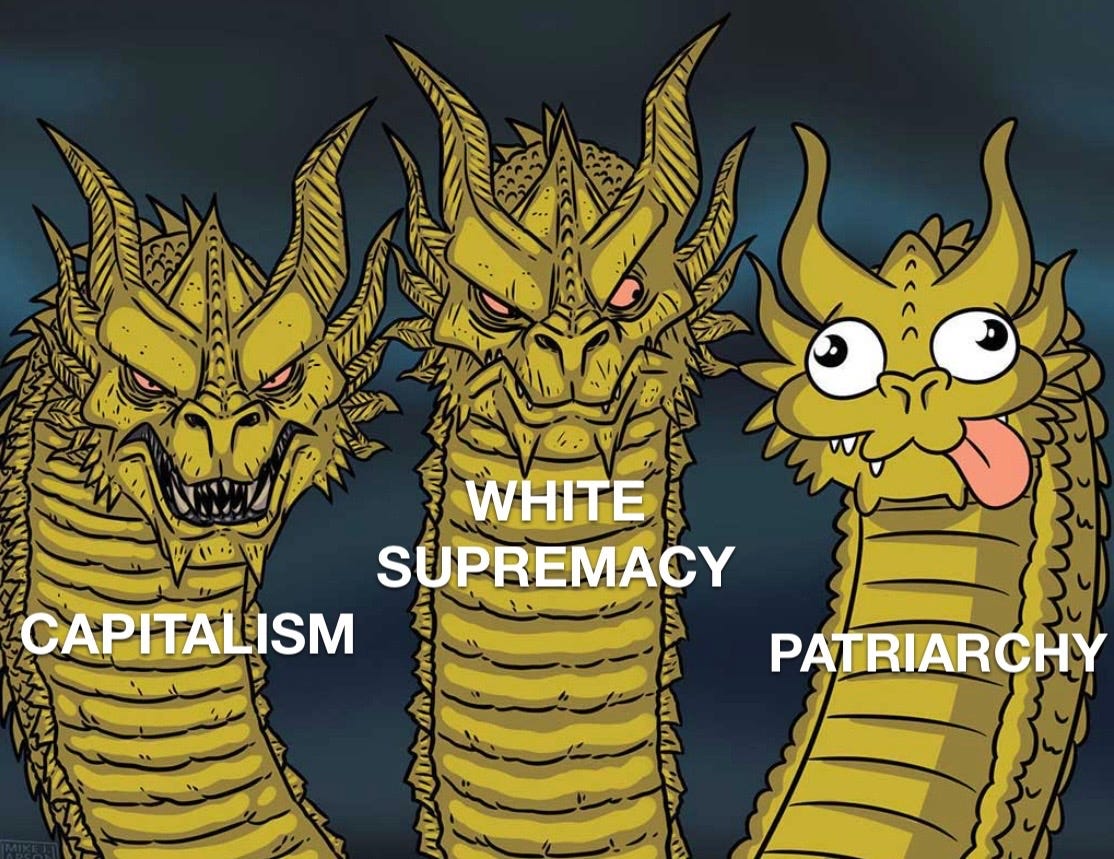
In April of last year, I presented a topic at the Beer Culture Summit that has long been of interest to me: smell’s role in social hierarchy and who is “allowed” to be smelly. Surprising no one reading this, the culprit of enforcing this hierarchy is the three-headed Hydra of capitalism, white supremacy, and patriarchy.
Our sense of smell has been erroneously regulated to a lesser sense, e.g., not as important as sight or hearing. An often overlooked core value of Eurocolonial cultural hegemony is the olfactory neutrality of those in positions of power, whereas marginalized classes are classified as odorous. Class was one of the first ways smell was used to distinguish the bourgeoisie, who did not exert themselves by working and had access to bathtubs and clean water, from the working class, whose jobs usually entailed sweaty manual labor. One perfumer suggested that different classes be scented differently:
Royal perfume for the aristocracy
Bourgeois perfume for the middle class
Disinfectant for the poor
For much of our history, Eurocolonial culture typically presents the ideal society as deodorized. Those in positions of power are considered inodorate or neutral smelling. In particular, American nationalism defines itself as inodorate compared to “foreigners.”2
That is not true, of course - no one in the history of humankind has completely lacked any bodily odor. Rather, the way people in positions of power smell is considered to be the default, and people who do not smell that way are othered and considered odorous.
But what happens when those in positions of power decide to embrace odors previously associated with marginalized populations? Is it still smelly? Or is it only considered odorous when it is associated with historically excluded communities?
A current trend in perfumery is scents that are considered “strange,” “animalic,” or “funky.” Instead of rose or vanilla accords, perfumers are creating “avant-garde” scents with notes such as garlic, gasoline, blood, dirt, and burning plastic. Suddenly, smelling like cumin and garlic is a sign of affluence and aspiration. But only if you’re white and possess economic and social capital. If you’re not white and/or don’t possess economic and social capital, you smell like “ethnic” food and are therefore odorous.
As this article on Dazed puts it, these types of scent aren’t per se problematic and may help shift our perspectives of who is allowed to smell like what. Odor molecules are indifferent to the hedonics we assign them. Assigning terms like “clean,” “fresh,” “smelly,” and “bad” is cultural, not natural. The next time you catch yourself thinking, “Gee, that person smells really bad,” I encourage you to interrogate why you associate certain aromas with “smelling bad” and to consider instead that you may be reinforcing marginalization.
And finally…
If you haven’t already, please check out the new Yakima Valley Residency Program. It is a new program aimed at elevating new and emerging freelance writers, storytellers, and communicators who are passionate about telling compelling stories about the Yakima Valley.
Please consider applying even if you are not yet a member of the North American Guild of Beer Writers (although I highly recommend joining as it is an informative and supportive group of people). Please, please do not self-select out because you are intimidated by either the application process or the residency. For every qualified person from a historically excluded community who opts not to apply for this residency because they feel like they don’t meet 110% of the qualifications, there are probably ten dudes that meet none of the qualifications submitting half-assed applications.
One of the beautiful things about this residency is that it’s open to storytelling in all of its forms - you can be a writer, but you can also do most of your storytelling through social media, a podcast, or a YouTube channel.
If you’re interested in applying for the residency, the deadline to apply is February 28. If you’d like a second set of eyes on your works or application, let me know.3
Places I am not willing to relocate to: Florida, Oklahoma, Texas, Missouri, and New York City (all shade to the four states, NYC because it’s not conducive to owning two giant breed dogs who are people-reactive). Places I am hesitant about relocating to but would consider for the right opportunity: California, Oregon, Washington (I’m scared of earthquakes, wildfires, and the overdue tectonic plate shift in the Pacific Ocean), and any place that has scarce natural resources.
No one is illegal on stolen land.
To be clear, I am not affiliated with the residency program or its selection process.